Egg Tarts
About This Dish
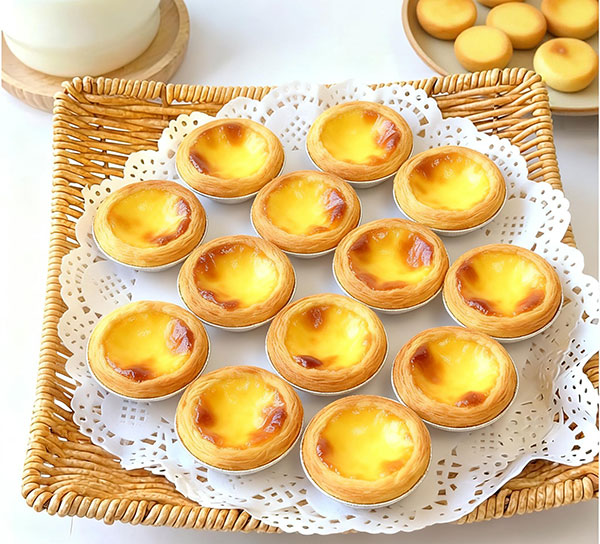
Egg tarts are one of those things that look way more complicated than they actually are. The first time I tried making them, I was intimidated—the pastry, the custard, getting everything just right. But then I realized that even if they're not perfect, they're still delicious. The pastry is flaky and buttery, the custard is smooth and sweet, and when you bite into one that's still warm from the oven, it's like a little moment of happiness. I make these when I want to feel fancy, or when I'm craving something sweet but not too heavy. They're the kind of thing that makes you feel like you've accomplished something, even if you're just making them for yourself.
Flavors
Nutrition Information
Ingredients
- All-purpose flour
- Butter
- Sugar
- Eggs
- Milk
- Heavy cream
- Vanilla extract
- Salt
- Tart molds
Instructions
-
1
Start with the pastry. Mix flour, a pinch of salt, and cold butter. You can use a food processor, or just work it with your hands until it looks like coarse crumbs.
-
2
Add cold water, a tablespoon at a time, until the dough comes together. Don't overwork it—you want it just combined.
-
3
Wrap the dough in plastic and chill it for at least 30 minutes. This makes it easier to work with.
-
4
While the dough chills, make your custard. Heat milk and cream together until they're warm but not boiling.
-
5
In a bowl, whisk together eggs, sugar, and vanilla extract until smooth.
-
6
Slowly pour the warm milk mixture into the eggs, whisking constantly. You want to temper the eggs so they don't scramble.
-
7
Strain the custard through a fine mesh sieve. This gets rid of any lumps and makes it super smooth.
-
8
Roll out your chilled dough and cut it into circles that fit your tart molds. Press them in gently.
-
9
Pour the custard into each tart shell, filling them about three-quarters full.
-
10
Bake at 375°F (190°C) for about 20-25 minutes, until the custard is set but still slightly jiggly in the center.
-
11
Let them cool before removing from the molds. They're best when they're still a bit warm.
Cooking Tips
- Don't skip the step of straining the custard. It makes a huge difference in the final texture—super smooth instead of lumpy.
- The pastry needs to be cold when you work with it. If it gets too warm, pop it back in the fridge for a few minutes.
- Don't overfill the tart shells. The custard will puff up a bit as it bakes, and you don't want it overflowing.
- The tarts are done when the custard is set but still has a slight jiggle in the center. Overbaking makes them rubbery.
Quick Summary
Make a buttery pastry shell, fill with a smooth custard mixture of eggs, milk, and sugar, then bake until the custard sets and the pastry is golden.